
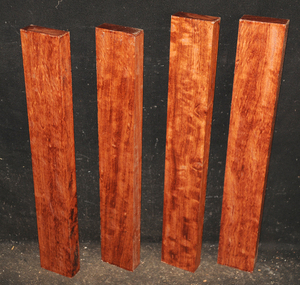
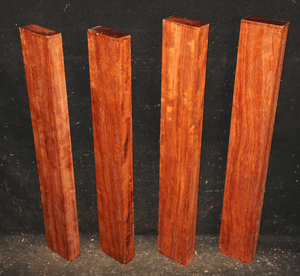
Figured Bubinga
Guibourtia tessmannii
Called by some woodworkers African Rosewood, Bubinga is a deep, lustrous, brownish-red color with a fine, darker striping. The figure makes the wood doubly beautiful. It is very hard and heavy and takes a glassy, smooth finish.
Due to CITES regulations, we can only ship this species to customers in the United States.
Item Number: W44539

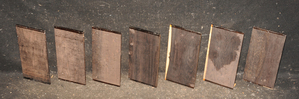
African Blackwood Guitar Peghead Veneers
Dalbergia melanoxylon
The heartwood is purplish to brownish-black with dark gray streaks giving an overall impression of being black. Lustrous with an attractive inner chatoyance. Very hard, heavy, close-grained, and virtually free from pores. Its stability and lovely tonal qualities make it an excellent instrument wood.
Due to CITES regulations, we can only ship this species to customers in the United States.
Item Number: IW37709
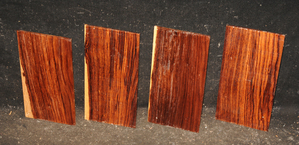
Honduras Rosewood Oversized Guitar Peghead Veneers
Dalbergia stevensonii
A true rosewood, most of our stock comes from Belize. Smelling like stored apples, it is a lovely wood to turn and takes a fantastic polish. Getting scarce on the world market.
Due to CITES regulations, we can only ship this species to customers in the United States.
Item Number: IW37708
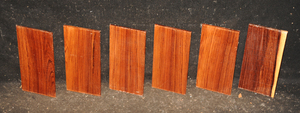
Honduras Rosewood Guitar Peghead Veneers
Dalbergia stevensonii
A true rosewood, most of our stock comes from Belize. Smelling like stored apples, it is a lovely wood to turn and takes a fantastic polish. Getting scarce on the world market.
Due to CITES regulations, we can only ship this species to customers in the United States.
Item Number: IW37707
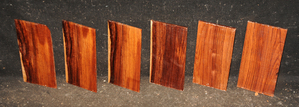
Honduras Rosewood Guitar Peghead Veneers
Dalbergia stevensonii
A true rosewood, most of our stock comes from Belize. Smelling like stored apples, it is a lovely wood to turn and takes a fantastic polish. Getting scarce on the world market.
Due to CITES regulations, we can only ship this species to customers in the United States.
Item Number: IW37706
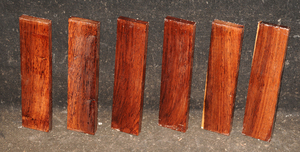
Honduras Rosewood Guitar Bridge Blanks
Dalbergia stevensonii
A true rosewood, most of our stock comes from Belize. Smelling like stored apples, it is a lovely wood to turn and takes a fantastic polish. Getting scarce on the world market.
Due to CITES regulations, we can only ship this species to customers in the United States.
Item Number: IW37705
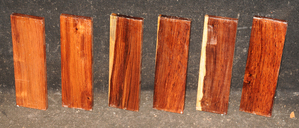
Honduras Rosewood Guitar Bridge Blanks
Dalbergia stevensonii
A true rosewood, most of our stock comes from Belize. Smelling like stored apples, it is a lovely wood to turn and takes a fantastic polish. Getting scarce on the world market.
Due to CITES regulations, we can only ship this species to customers in the United States.
Item Number: IW37704
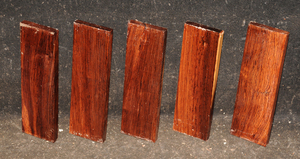
Honduras Rosewood Guitar Bridge Blanks
Dalbergia stevensonii
A true rosewood, most of our stock comes from Belize. Smelling like stored apples, it is a lovely wood to turn and takes a fantastic polish. Getting scarce on the world market.
Due to CITES regulations, we can only ship this species to customers in the United States.
Item Number: IW37703
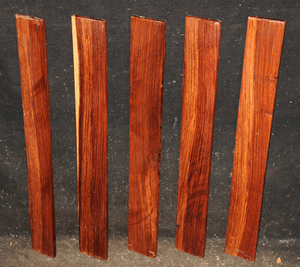
Honduras Rosewood Guitar Finger Boards
Dalbergia stevensonii
A true rosewood, most of our stock comes from Belize. Smelling like stored apples, it is a lovely wood to turn and takes a fantastic polish. Getting scarce on the world market.
Due to CITES regulations, we can only ship this species to customers in the United States.
Item Number: IW37702
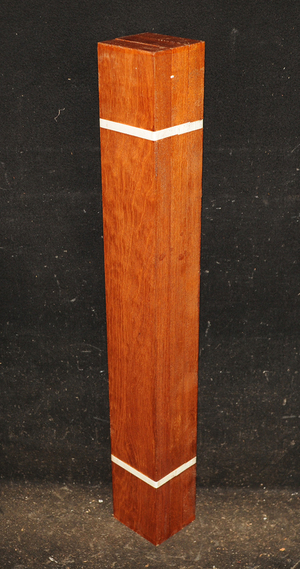
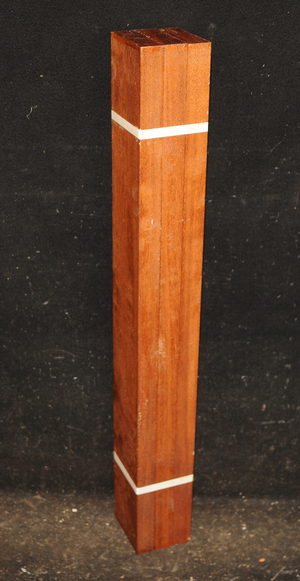
Figured Genuine Mahogany 3 piece Guitar Neck Set
Swietenia macrophylla
Also called Acajou, Tropical American Mahogany, and Honduras Mahogany. This medium to large tree occurs throughout Central and South America. Related to Cuban Mahogany (Swietenia mahogani) and Pacific Coast Mahogany (Swietenia humilis). It produces one of the classic furniture and cabinetmaking woods. The heartwood varies from a light reddish-brown to a rich, dark red. Generally straight grained and exceptionally stable, it is easy to machine, hand plane, sand and finish. Occasional logs produce several figures, curly, quilted, and the rare plum pudding figure which looks like large drips running down the board. Used in fine furniture and joinery, boat building, and in the guitar industry for acoustic sets and necks.
Due to CITES regulations, we can only ship this species to customers in the United States.
Item Number: IW37701
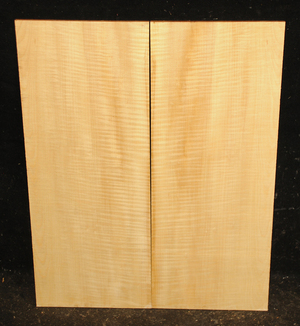
Curly European Sycamore Lam Top Guitar Set
Acer pseudoplatanus
This European Maple is native to central Europe and west Asia. It is a tough, white or cream colored, fine-grained timber. It reminds me of vanilla ice cream because it is so even-colored. It works well in any grain direction. It is used for musical instruments, furniture, cabinetry, and because it is non-staining it is used for kitchen utensils, wooden spoons, rolling pins, and cutting boards. The figure is fiddleback on the quartersawn surface and more of a broken curl on the flatsawn surface. Select, quartersawn material is used for violin backs and sides and necks. Dry.
Item Number: IW37698
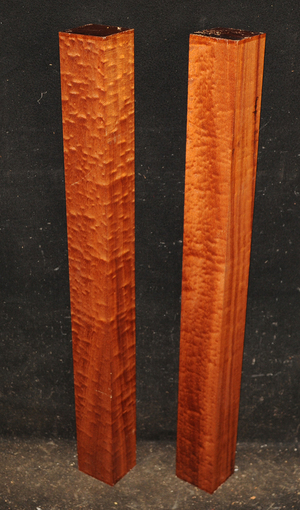
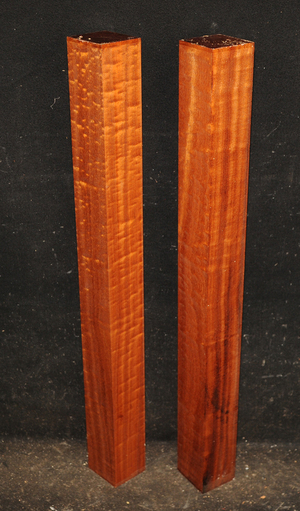
Pomelle Sapele Guitar Neck Blanks
Entandrophragma cylindricum
The Sapele tree is found in tropical West & Central Africa. Even when without figure as this board Sapele has an amazing luster and takes a beautiful polish.
Item Number: IW37697
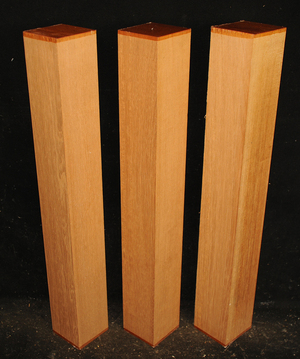
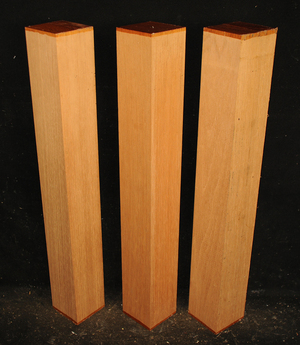
Spanish Cedar Guitar Neck Blanks
Cedrela sp.
Also called Cigar Box Cedar because of its aromatic scent and its wide use in tobacco humidors. It resembles the wood of South American Mahogany to which it is related. Heartwood color varies from a light pinkish brown to reddish brown. It is fairly light in weight.
Due to CITES regulations, we can only ship this species to customers in the United States.
Item Number: IW37696
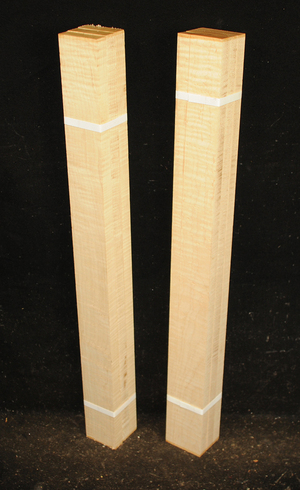
Curly Hard Maple 3 piece Guitar Neck Sets
Acer saccharum
The heartwood is white or cream to light brown or reddish brown. Because of the generally small size of available logs, most sawmills produce flatsawn boards which will show a broken curl on the surface and a fiddleback curl on the quartersawn edge. Hard and heavy, 45 lbs/cu ft. Easy to work and takes a smooth polish. U.S.A.
Item Number: IW37695
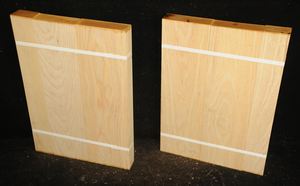
Swamp Ash 3 piece Solid Body Guitar Blanks
Fraxinus profunda
This White Ash comes from the southern U.S.A. and is noteworthy for its very light weight, 2.2-3.2 lbs. per board foot. Used mainly in the musical instrument trade for light weight electric guitars, it also has very nice acoustic properties.
Item Number: IW37694
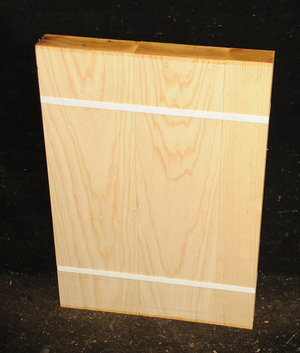
Swamp Ash 3 piece Solid Body Guitar Blank
Fraxinus profunda
This White Ash comes from the southern U.S.A. and is noteworthy for its very light weight, 2.2-3.2 lbs. per board foot. Used mainly in the musical instrument trade for light weight electric guitars, it also has very nice acoustic properties.
Item Number: IW37693
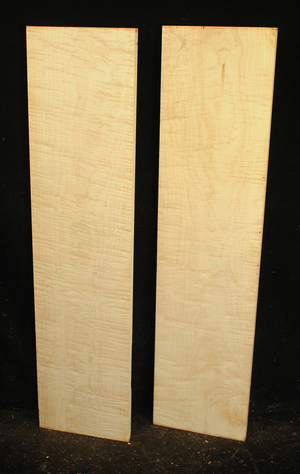
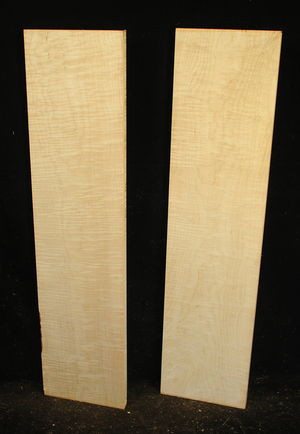
Curly Hard Maple
Acer saccharum
The heartwood is white or cream to light brown or reddish brown. Because of the generally small size of available logs, most sawmills produce flatsawn boards which will show a broken curl on the surface and a fiddleback curl on the quartersawn edge. Hard and heavy, 45 lbs/cu ft. Easy to work and takes a smooth polish. U.S.A.
Item Number: W44537
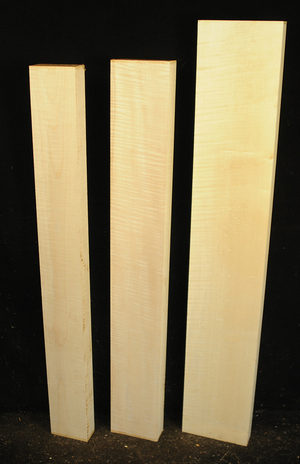
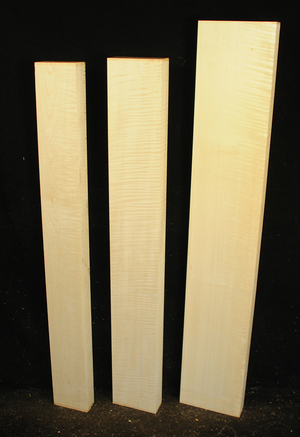
Curly European Sycamore
Acer pseudoplatanus
This European Maple is native to central Europe and west Asia. It is a tough, white or cream colored, fine-grained timber. It reminds me of vanilla ice cream because it is so even-colored. It works well in any grain direction. It is used for musical instruments, furniture, cabinetry, and because it is non-staining it is used for kitchen utensils, wooden spoons, rolling pins, and cutting boards. The figure is fiddleback on the quartersawn surface and more of a broken curl on the flatsawn surface. Select, quartersawn material is used for violin backs and sides and necks. Dry.
Item Number: W44536
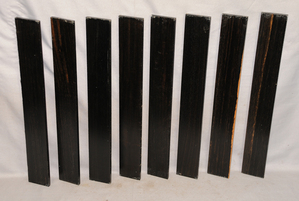
West African Ebony Guitar Finger Boards
Diospyros crassiflora
Sometimes called Gabon or Gaboon, this Ebony is sometimes jet black but oftentimes has grayish streaks that mostly disappear when finished or after the made object has been put into service. This Ebony has a marked resistance to checking that is characteristic of some of the Indian and Asian species. It has a wonderful texture and is easily carved, planed, turned, and milled. It is fairly fine-grained and takes a high polish. This Ebony usually originates in either Cameroon or Nigeria and the logs are rough hewn in the forest and oftentimes brought to the nearest road by human porters. With the disappearance of other species of black Ebony this species is fast becoming the Ebony of choice.
Item Number: IW37691
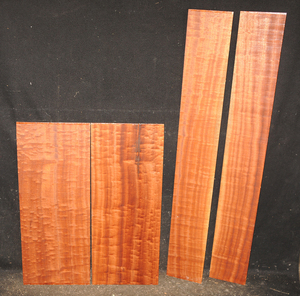
Pomelle Sapele Acoustic Guitar Back & Sides Set
Entandrophragma cylindricum
The Sapele tree is found in tropical West & Central Africa. Even when without figure as this board Sapele has an amazing luster and takes a beautiful polish.
Item Number: IW37689
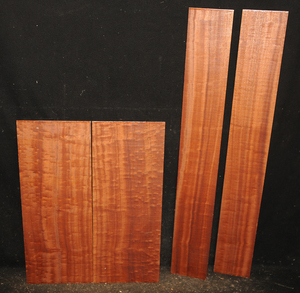
Pomelle Sapele Acoustic Guitar Back & Sides Set
Entandrophragma cylindricum
The Sapele tree is found in tropical West & Central Africa. Even when without figure as this board Sapele has an amazing luster and takes a beautiful polish.
Item Number: IW37688
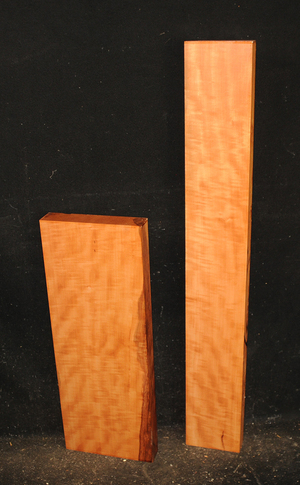
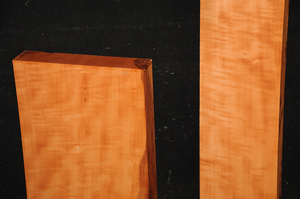
Figured European Pearwood Acoustic Guitar Back & Sides Set Billets
Pyrus communis
Almost all Pearwood imported into the U.S.A. has been steamed to bring out a more pinkish-red color and to prevent drying stresses. Formerly the wood was used for carving, turning, drawing instruments, wood engravings, textile printing blocks, and tool handles. Stained black it is an excellent substitute for Ebony. Contemporary uses include woodwinds such as recorders, furniture, kitchen accessories, jewelry and other boxes, and architectural uses such as paneling and doors.
Item Number: IW37686
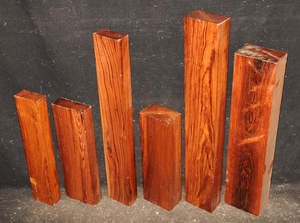
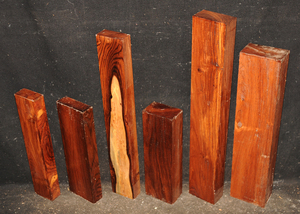
Honduras Rosewood
Dalbergia stevensonii
A true rosewood, most of our stock comes from Belize. Smelling like stored apples, it is a lovely wood to turn and takes a fantastic polish. Getting scarce on the world market.
Due to CITES regulations, we can only ship this species to customers in the United States.
Item Number: W44532
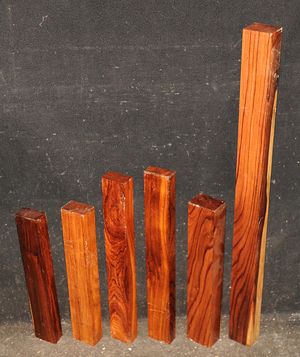
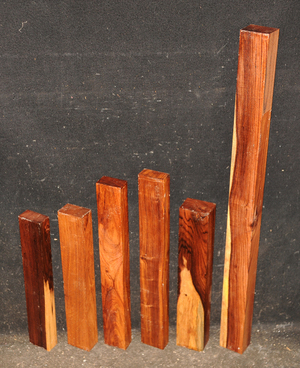
Honduras Rosewood
Dalbergia stevensonii
A true rosewood, most of our stock comes from Belize. Smelling like stored apples, it is a lovely wood to turn and takes a fantastic polish. Getting scarce on the world market.
Due to CITES regulations, we can only ship this species to customers in the United States.
Item Number: W44531
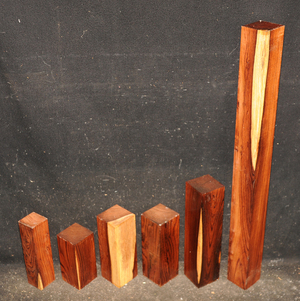
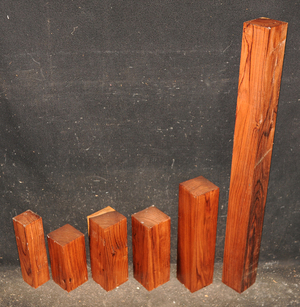
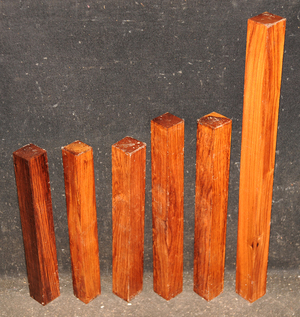
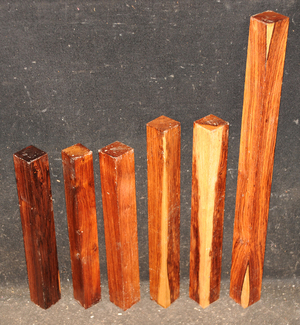
Honduras Rosewood Turning Squares
Dalbergia stevensonii
A true rosewood, most of our stock comes from Belize. Smelling like stored apples, it is a lovely wood to turn and takes a fantastic polish. Getting scarce on the world market.
Due to CITES regulations, we can only ship this species to customers in the United States.
Item Number: W44530
Honduras Rosewood Turning Squares
Dalbergia stevensonii
A true rosewood, most of our stock comes from Belize. Smelling like stored apples, it is a lovely wood to turn and takes a fantastic polish. Getting scarce on the world market.
Due to CITES regulations, we can only ship this species to customers in the United States.
Item Number: W44529
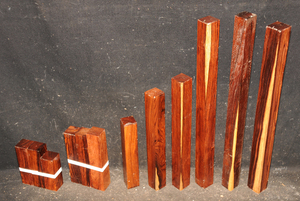
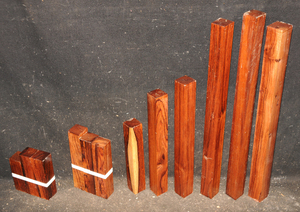
Honduras Rosewood Bundles & Turning Squares
Dalbergia stevensonii
A true rosewood, most of our stock comes from Belize. Smelling like stored apples, it is a lovely wood to turn and takes a fantastic polish. Getting scarce on the world market.
Due to CITES regulations, we can only ship this species to customers in the United States.
A has 3 pieces.
B has 3 pieces.
Item Number: W44528
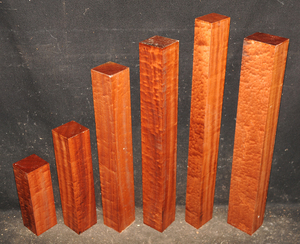
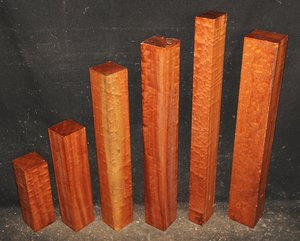
Pomelle Sapele Turning Squares & Blocks
Entandrophragma cylindricum
The Sapele tree is found in tropical West & Central Africa. Even when without figure as this board Sapele has an amazing luster and takes a beautiful polish.
Item Number: W44527
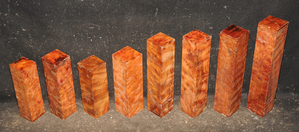
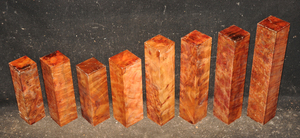
Camphor Burl Turning Squares
Cinnamomum sp.
This rare burl is from S.E. Asia and is seldom seen on the world market. It is fine-grained and varies in color from a light reddish-brown to almost scarlet. It is easy to work and has a very pungent, spicy scent. For a burl it is remarkably stable. Green to partially air dried.
Item Number: W44526
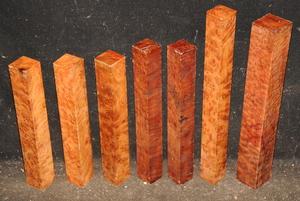
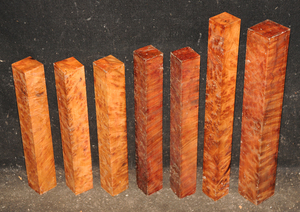
Camphor Burl Turning Squares
Cinnamomum sp.
This rare burl is from S.E. Asia and is seldom seen on the world market. It is fine-grained and varies in color from a light reddish-brown to almost scarlet. It is easy to work and has a very pungent, spicy scent. For a burl it is remarkably stable. Green to partially air dried.
Item Number: W44525
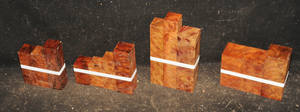
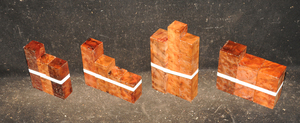
Camphor Burl Turning Squares Bundle
Cinnamomum sp.
This rare burl is from S.E. Asia and is seldom seen on the world market. It is fine-grained and varies in color from a light reddish-brown to almost scarlet. It is easy to work and has a very pungent, spicy scent. For a burl it is remarkably stable. Green to partially air dried.
A has 3 pieces.
B has 4 pieces.
C has 3 pieces.
D has 3 pieces.
Item Number: W44524
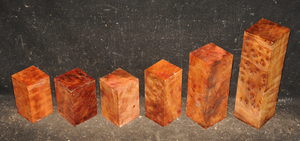
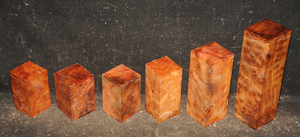
Camphor Burl Turning Squares
Cinnamomum sp.
This rare burl is from S.E. Asia and is seldom seen on the world market. It is fine-grained and varies in color from a light reddish-brown to almost scarlet. It is easy to work and has a very pungent, spicy scent. For a burl it is remarkably stable. Green to partially air dried.
Item Number: W44523
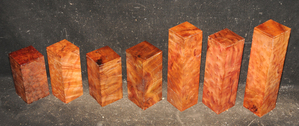
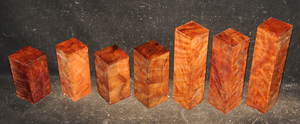
Camphor Burl Turning Squares
Cinnamomum sp.
This rare burl is from S.E. Asia and is seldom seen on the world market. It is fine-grained and varies in color from a light reddish-brown to almost scarlet. It is easy to work and has a very pungent, spicy scent. For a burl it is remarkably stable. Green to partially air dried.
Item Number: W44522
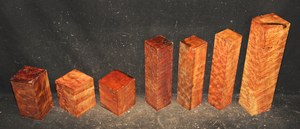
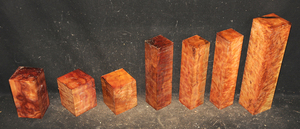
Camphor Burl Turning Squares
Cinnamomum sp.
This rare burl is from S.E. Asia and is seldom seen on the world market. It is fine-grained and varies in color from a light reddish-brown to almost scarlet. It is easy to work and has a very pungent, spicy scent. For a burl it is remarkably stable. Green to partially air dried.
Item Number: W44521
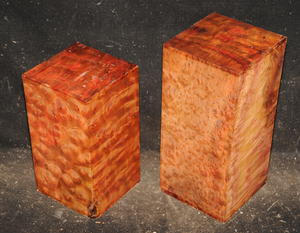
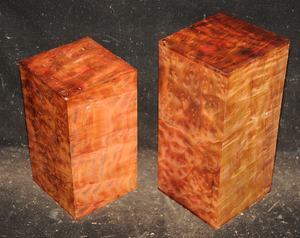
Camphor Burl Turning Squares
Cinnamomum sp.
This rare burl is from S.E. Asia and is seldom seen on the world market. It is fine-grained and varies in color from a light reddish-brown to almost scarlet. It is easy to work and has a very pungent, spicy scent. For a burl it is remarkably stable. Green to partially air dried.
Item Number: W44520
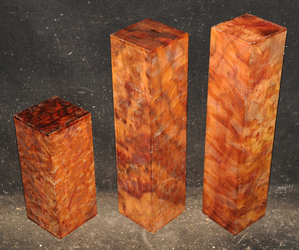
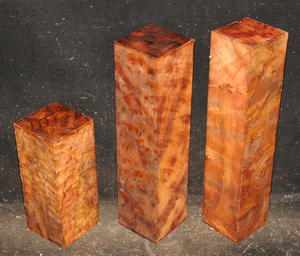
Camphor Burl Turning Squares
Cinnamomum sp.
This rare burl is from S.E. Asia and is seldom seen on the world market. It is fine-grained and varies in color from a light reddish-brown to almost scarlet. It is easy to work and has a very pungent, spicy scent. For a burl it is remarkably stable. Green to partially air dried.
Item Number: W44519
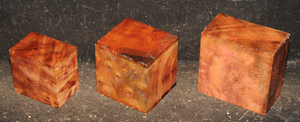
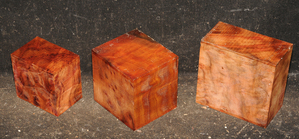
Camphor Burl Bowl Blanks
Cinnamomum sp.
This rare burl is from S.E. Asia and is seldom seen on the world market. It is fine-grained and varies in color from a light reddish-brown to almost scarlet. It is easy to work and has a very pungent, spicy scent. For a burl it is remarkably stable. Green to partially air dried.
Item Number: W44516
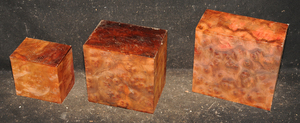
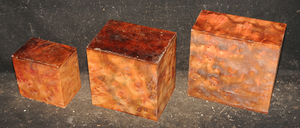
Camphor Burl Bowl Blanks
Cinnamomum sp.
This rare burl is from S.E. Asia and is seldom seen on the world market. It is fine-grained and varies in color from a light reddish-brown to almost scarlet. It is easy to work and has a very pungent, spicy scent. For a burl it is remarkably stable. Green to partially air dried.
Item Number: W44513
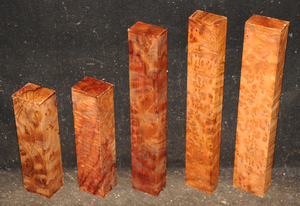
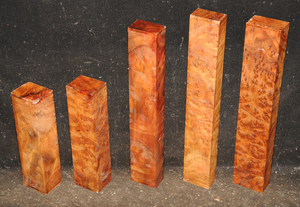
Camphor Burl
Cinnamomum sp.
This rare burl is from S.E. Asia and is seldom seen on the world market. It is fine-grained and varies in color from a light reddish-brown to almost scarlet. It is easy to work and has a very pungent, spicy scent. For a burl it is remarkably stable. Green to partially air dried.
Item Number: W44512
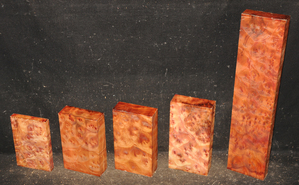
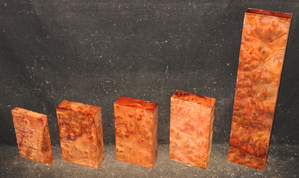
Camphor Burl
Cinnamomum sp.
This rare burl is from S.E. Asia and is seldom seen on the world market. It is fine-grained and varies in color from a light reddish-brown to almost scarlet. It is easy to work and has a very pungent, spicy scent. For a burl it is remarkably stable. Green to partially air dried.
Item Number: W44511