



West African Ebony Turning Squares
Diospyros sp.
Originating in S.E. Asia, especially Indonesia, this Ebony is sometimes called Malaysian Blackwood. The heartwood is dark, sometimes with black stripes or streaking and oftentimes with a greenish cast in sharp contrast to the white to straw colored sapwood. We import this in large cants up to 8 x 14" with lengths to 10 feet. The wood is hard and heavy and is capable of a fine, high polish. Excellent for turnery and precious woodworks such as musical instruments, boxes, jewelry, etc.
Item Number: W42053


West African Ebony Turning Squares
Diospyros sp.
Originating in S.E. Asia, especially Indonesia, this Ebony is sometimes called Malaysian Blackwood. The heartwood is dark, sometimes with black stripes or streaking and oftentimes with a greenish cast in sharp contrast to the white to straw colored sapwood. We import this in large cants up to 8 x 14" with lengths to 10 feet. The wood is hard and heavy and is capable of a fine, high polish. Excellent for turnery and precious woodworks such as musical instruments, boxes, jewelry, etc.
Item Number: W42052

West African Ebony
Diospyros sp.
Originating in S.E. Asia, especially Indonesia, this Ebony is sometimes called Malaysian Blackwood. The heartwood is dark, sometimes with black stripes or streaking and oftentimes with a greenish cast in sharp contrast to the white to straw colored sapwood. We import this in large cants up to 8 x 14" with lengths to 10 feet. The wood is hard and heavy and is capable of a fine, high polish. Excellent for turnery and precious woodworks such as musical instruments, boxes, jewelry, etc.
Item Number: W41797


Sabah Ebony Thins
Diospyros sp
This Indonesian Ebony is also known as Kayu Malam. It usually has nice striping on the radial face and is easy to work and sand and takes a very nice finish. Used for cabinetry, furniture, turned objects, jewelry cases, knife handles, and other precious items. Air-dried.
Item Number: W40183


Sabah Ebony
Diospyros sp
This Indonesian Ebony is also known as Kayu Malam. It usually has nice striping on the radial face and is easy to work and sand and takes a very nice finish. Used for cabinetry, furniture, turned objects, jewelry cases, knife handles, and other precious items. Air-dried.
Item Number: W40179


Sabah Ebony Turning Squares
Diospyros sp
This Indonesian Ebony is also known as Kayu Malam. It usually has nice striping on the radial face and is easy to work and sand and takes a very nice finish. Used for cabinetry, furniture, turned objects, jewelry cases, knife handles, and other precious items. Air-dried.
Item Number: W40177

West African Ebony
Diospyros sp.
Originating in S.E. Asia, especially Indonesia, this Ebony is sometimes called Malaysian Blackwood. The heartwood is dark, sometimes with black stripes or streaking and oftentimes with a greenish cast in sharp contrast to the white to straw colored sapwood. We import this in large cants up to 8 x 14" with lengths to 10 feet. The wood is hard and heavy and is capable of a fine, high polish. Excellent for turnery and precious woodworks such as musical instruments, boxes, jewelry, etc.
Item Number: W39576
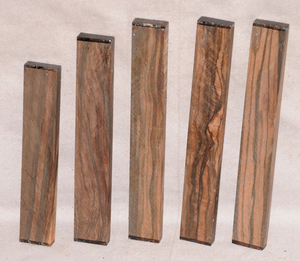
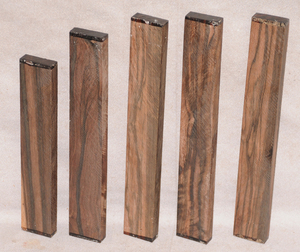
New Guinea Striped Ebony Guitar Bridge Blanks
Diospyros insularis
This wood originated from a small, sparsely inhabited island off the east coast of New Guinea. Some of these trees grow to enormous dimensions. One of the first logs we received from here was 3 1/2 feet in diameter, 18 feet long, and weighed 7 tons. It is fine-grained and takes a glassy smooth finish. Most of these pieces have a "marble-cake" look to the end grain that is outstanding.
Item Number: IW37523
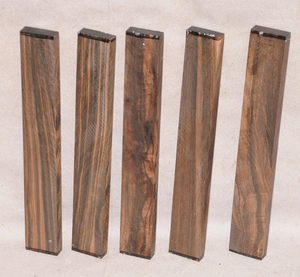
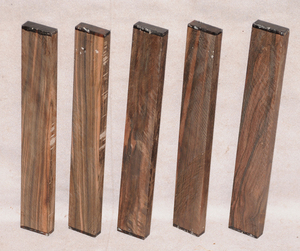
New Guinea Striped Ebony Guitar Bridge Blanks
Diospyros insularis
This wood originated from a small, sparsely inhabited island off the east coast of New Guinea. Some of these trees grow to enormous dimensions. One of the first logs we received from here was 3 1/2 feet in diameter, 18 feet long, and weighed 7 tons. It is fine-grained and takes a glassy smooth finish. Most of these pieces have a "marble-cake" look to the end grain that is outstanding.
Item Number: IW37522
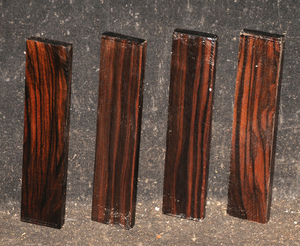
New Guinea Striped Ebony Guitar Bridge Blanks
Diospyros insularis
This wood originated from a small, sparsely inhabited island off the east coast of New Guinea. Some of these trees grow to enormous dimensions. One of the first logs we received from here was 3 1/2 feet in diameter, 18 feet long, and weighed 7 tons. It is fine-grained and takes a glassy smooth finish. Most of these pieces have a "marble-cake" look to the end grain that is outstanding.
Item Number: IW37423
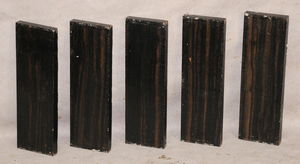
West African Ebony Guitar Bridge Blanks
Diospyros insularis
This wood originated from a small, sparsely inhabited island off the east coast of New Guinea. Some of these trees grow to enormous dimensions. One of the first logs we received from here was 3 1/2 feet in diameter, 18 feet long, and weighed 7 tons. It is fine-grained and takes a glassy smooth finish. Most of these pieces have a "marble-cake" look to the end grain that is outstanding.
Item Number: IW37301
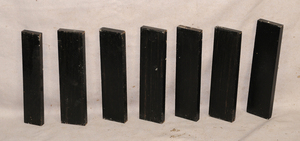
West African Ebony Guitar Bridge Blanks
Diospyros insularis
This wood originated from a small, sparsely inhabited island off the east coast of New Guinea. Some of these trees grow to enormous dimensions. One of the first logs we received from here was 3 1/2 feet in diameter, 18 feet long, and weighed 7 tons. It is fine-grained and takes a glassy smooth finish. Most of these pieces have a "marble-cake" look to the end grain that is outstanding.
Item Number: IW37300


New Guinea Striped Ebony
Diospyros insularis
This wood originated from a small, sparsely inhabited island off the east coast of New Guinea. Some of these trees grow to enormous dimensions. One of the first logs we received from here was 3 1/2 feet in diameter, 18 feet long, and weighed 7 tons. It is fine-grained and takes a glassy smooth finish. Most of these pieces have a "marble-cake" look to the end grain that is outstanding.
Item Number: W40770
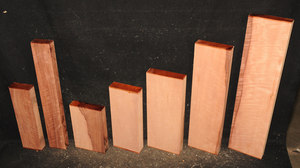
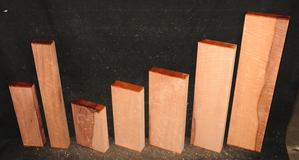
Figured European Pearwood
Pyrus communis
Almost all Pearwood imported into the U.S.A. has been steamed to bring out a more pinkish-red color and to prevent drying stresses. Formerly the wood was used for carving, turning, drawing instruments, wood engravings, textile printing blocks, and tool handles. Stained black it is an excellent substitute for Ebony. Contemporary uses include woodwinds such as recorders, furniture, kitchen accessories, jewelry and other boxes, and architectural uses such as paneling and doors.
Item Number: W44546
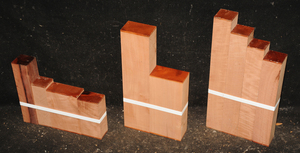
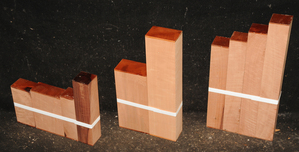
European Pearwood Bundles
Pyrus communis
Almost all Pearwood imported into the U.S.A. has been steamed to bring out a more pinkish-red color and to prevent drying stresses. Formerly the wood was used for carving, turning, drawing instruments, wood engravings, textile printing blocks, and tool handles. Stained black it is an excellent substitute for Ebony. Contemporary uses include woodwinds such as recorders, furniture, kitchen accessories, jewelry and other boxes, and architectural uses such as paneling and doors.
A has 4 pieces.
B has 2 pieces.
C has 4 pieces.
Item Number: W44545
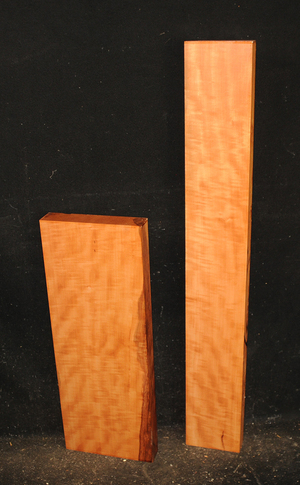
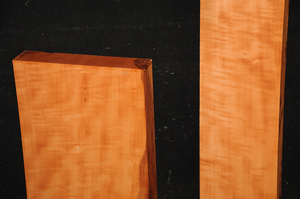
Figured European Pearwood Acoustic Guitar Back & Sides Set Billets
Pyrus communis
Almost all Pearwood imported into the U.S.A. has been steamed to bring out a more pinkish-red color and to prevent drying stresses. Formerly the wood was used for carving, turning, drawing instruments, wood engravings, textile printing blocks, and tool handles. Stained black it is an excellent substitute for Ebony. Contemporary uses include woodwinds such as recorders, furniture, kitchen accessories, jewelry and other boxes, and architectural uses such as paneling and doors.
Item Number: IW37686


Masur Birch Quarter Log & Full Log Sections
Betula alba
A classically striped Ebony from Asia. Increasingly hard to find on the world market. Quartersawn.
Item Number: W44500
Katalox
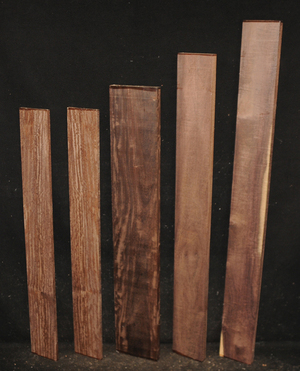
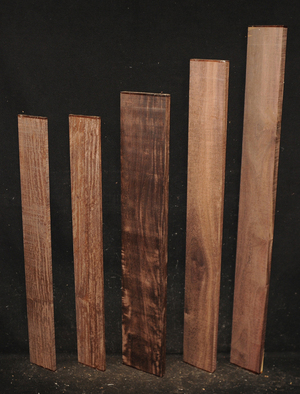
Swartzia cubensis
This is a large tree 2-4' diameter, by up to 120' tall from Mexico & Central America. The wood is very dense and fairly fine-grained. Because of its hardness it can be difficult to work but it takes a fine polish. Its dark color leads some to call it Mexican Ebano and very dark pieces can be used as a substitute for true black Ebony, especially in laminations and inlays. Straight-grained wood can be used for musical instrument fingerboards and bridge blanks.
Item Number: W44413
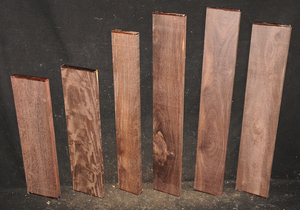
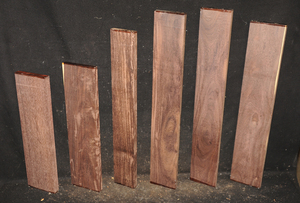
Katalox
Swartzia cubensis
This is a large tree 2-4' diameter, by up to 120' tall from Mexico & Central America. The wood is very dense and fairly fine-grained. Because of its hardness it can be difficult to work but it takes a fine polish. Its dark color leads some to call it Mexican Ebano and very dark pieces can be used as a substitute for true black Ebony, especially in laminations and inlays. Straight-grained wood can be used for musical instrument fingerboards and bridge blanks.
B is figured.
Item Number: W44337
European Pearwood
Pyrus communis
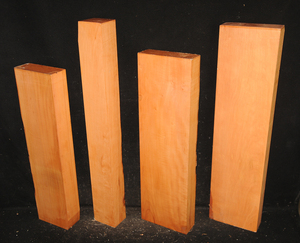
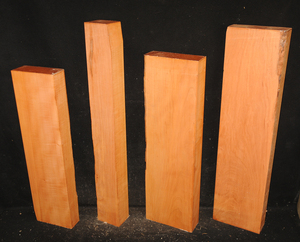
Almost all Pearwood imported into the U.S.A. has been steamed to bring out a more pinkish-red color and to prevent drying stresses. Formerly the wood was used for carving, turning, drawing instruments, wood engravings, textile printing blocks, and tool handles. Stained black it is an excellent substitute for Ebony. Contemporary uses include woodwinds such as recorders, furniture, kitchen accessories, jewelry and other boxes, and architectural uses such as paneling and doors.
A has some wane on one corner.
B has some very slight wane on one corner.
C has some very slight wane on one corner.
D has some wane on one corner.
Item Number: W44265
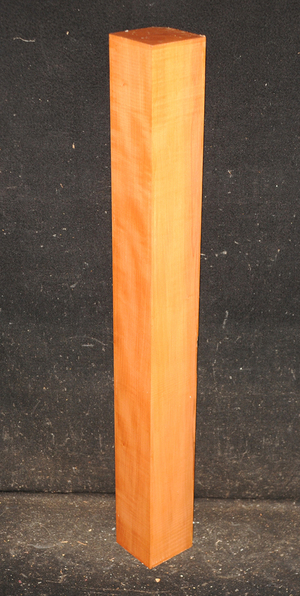
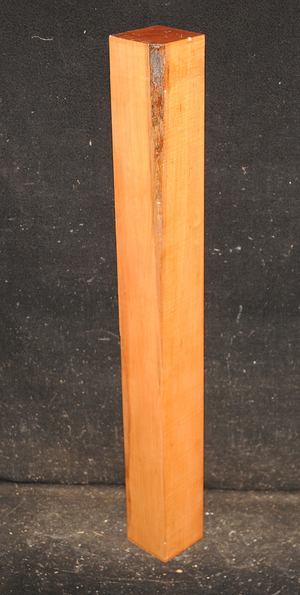
European Pearwood Rolling Pin Blank
Pyrus communis
Almost all Pearwood imported into the U.S.A. has been steamed to bring out a more pinkish-red color and to prevent drying stresses. Formerly the wood was used for carving, turning, drawing instruments, wood engravings, textile printing blocks, and tool handles. Stained black it is an excellent substitute for Ebony. Contemporary uses include woodwinds such as recorders, furniture, kitchen accessories, jewelry and other boxes, and architectural uses such as paneling and doors.
Item Number: W44258
European Pearwood Blocks
Pyrus communis
Almost all Pearwood imported into the U.S.A. has been steamed to bring out a more pinkish-red color and to prevent drying stresses. Formerly the wood was used for carving, turning, drawing instruments, wood engravings, textile printing blocks, and tool handles. Stained black it is an excellent substitute for Ebony. Contemporary uses include woodwinds such as recorders, furniture, kitchen accessories, jewelry and other boxes, and architectural uses such as paneling and doors.
Item Number: W44230
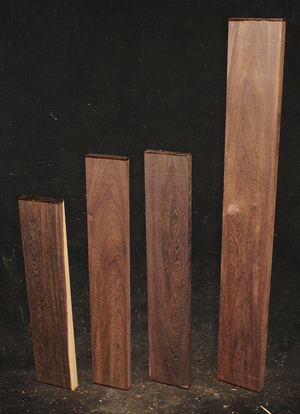
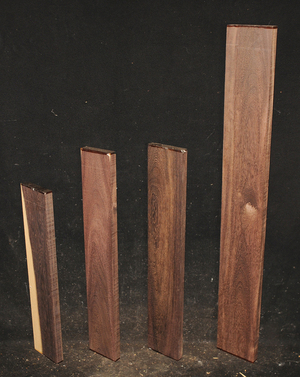
Katalox
Swartzia cubensis
This is a large tree 2-4' diameter, by up to 120' tall from Mexico & Central America. The wood is very dense and fairly fine-grained. Because of its hardness it can be difficult to work but it takes a fine polish. Its dark color leads some to call it Mexican Ebano and very dark pieces can be used as a substitute for true black Ebony, especially in laminations and inlays. Straight-grained wood can be used for musical instrument fingerboards and bridge blanks.
Item Number: W44180
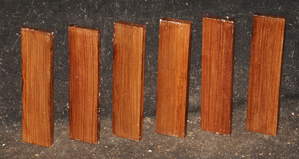
Brown Ebony Guitar Bridge Blanks
Item Number: IW37440
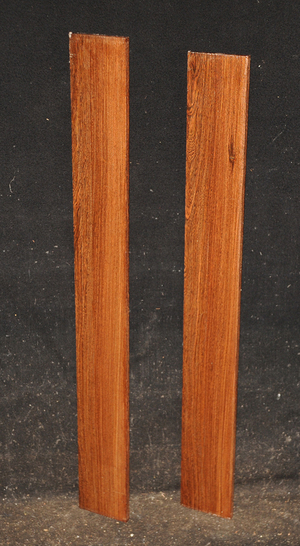
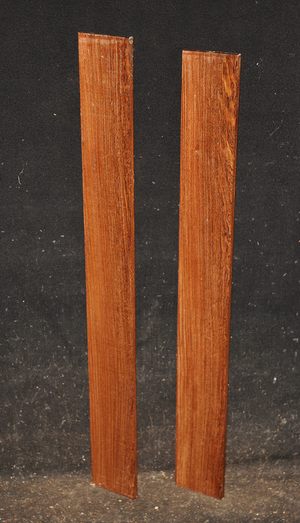
Brown Ebony Bass Guitar Finger Boards
Item Number: IW37437
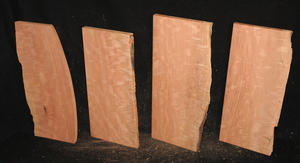
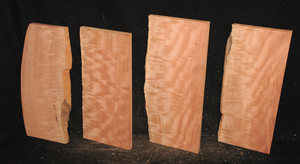
Figured European Pearwood Charcuterie Board Blanks
Pyrus communis
Almost all Pearwood imported into the U.S.A. has been steamed to bring out a more pinkish-red color and to prevent drying stresses. Formerly the wood was used for carving, turning, drawing instruments, wood engravings, textile printing blocks, and tool handles. Stained black it is an excellent substitute for Ebony. Contemporary uses include woodwinds such as recorders, furniture, kitchen accessories, jewelry and other boxes, and architectural uses such as paneling and doors.
These boards may have a few natural defects that were not trimmed off but are otherwise lovely pieces of wood. Surfaced on both faces and flat.
Item Number: W44061
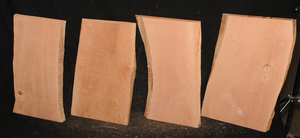
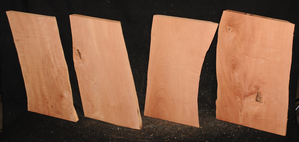
European Pearwood Charcuterie Board Blanks
Pyrus communis
Almost all Pearwood imported into the U.S.A. has been steamed to bring out a more pinkish-red color and to prevent drying stresses. Formerly the wood was used for carving, turning, drawing instruments, wood engravings, textile printing blocks, and tool handles. Stained black it is an excellent substitute for Ebony. Contemporary uses include woodwinds such as recorders, furniture, kitchen accessories, jewelry and other boxes, and architectural uses such as paneling and doors.
These boards may have a few natural defects that were not trimmed off but are otherwise lovely pieces of wood. Surfaced on both faces and flat.
Item Number: W44060
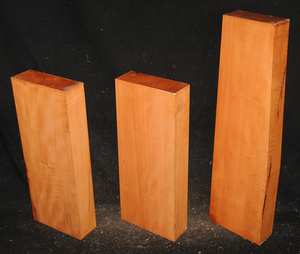
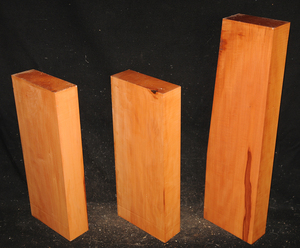
Figured European Pearwood
Pyrus communis
Almost all Pearwood imported into the U.S.A. has been steamed to bring out a more pinkish-red color and to prevent drying stresses. Formerly the wood was used for carving, turning, drawing instruments, wood engravings, textile printing blocks, and tool handles. Stained black it is an excellent substitute for Ebony. Contemporary uses include woodwinds such as recorders, furniture, kitchen accessories, jewelry and other boxes, and architectural uses such as paneling and doors.
Item Number: W44059
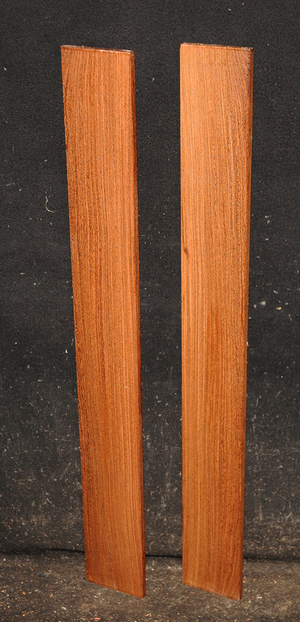
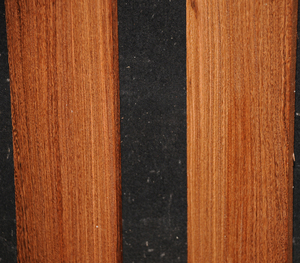
Brown Ebony Bass Guitar Finger Boards
Item Number: IW37395
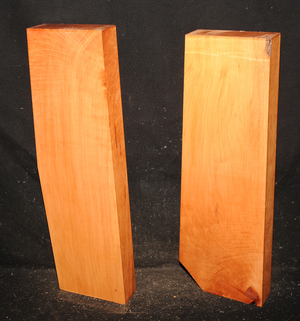
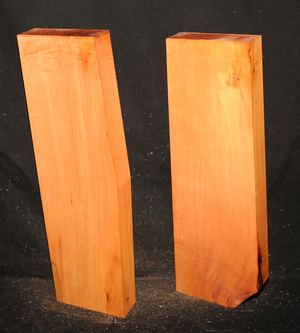
European Pearwood
Pyrus communis
Almost all Pearwood imported into the U.S.A. has been steamed to bring out a more pinkish-red color and to prevent drying stresses. Formerly the wood was used for carving, turning, drawing instruments, wood engravings, textile printing blocks, and tool handles. Stained black it is an excellent substitute for Ebony. Contemporary uses include woodwinds such as recorders, furniture, kitchen accessories, jewelry and other boxes, and architectural uses such as paneling and doors.
Item Number: W43996
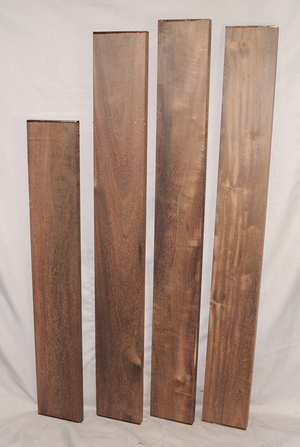
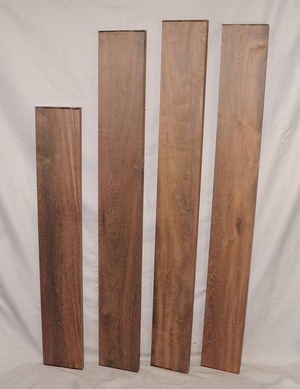
Katalox
Swartzia cubensis
This is a large tree 2-4' diameter, by up to 120' tall from Mexico & Central America. The wood is very dense and fairly fine-grained. Because of its hardness it can be difficult to work but it takes a fine polish. Its dark color leads some to call it Mexican Ebano and very dark pieces can be used as a substitute for true black Ebony, especially in laminations and inlays. Straight-grained wood can be used for musical instrument fingerboards and bridge blanks.
Item Number: W43607
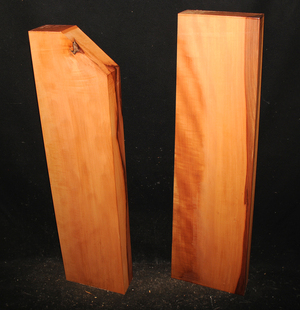
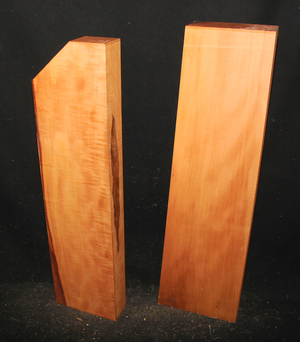
Figured European Pearwood
Pyrus communis
Almost all Pearwood imported into the U.S.A. has been steamed to bring out a more pinkish-red color and to prevent drying stresses. Formerly the wood was used for carving, turning, drawing instruments, wood engravings, textile printing blocks, and tool handles. Stained black it is an excellent substitute for Ebony. Contemporary uses include woodwinds such as recorders, furniture, kitchen accessories, jewelry and other boxes, and architectural uses such as paneling and doors.
These were all cut from 30 year old stock.
Item Number: W43584
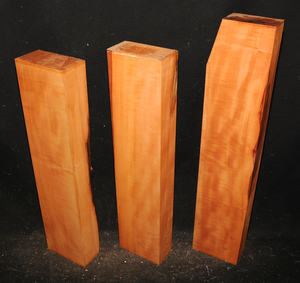
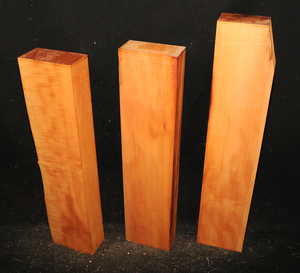
Figured European Pearwood
Pyrus communis
Almost all Pearwood imported into the U.S.A. has been steamed to bring out a more pinkish-red color and to prevent drying stresses. Formerly the wood was used for carving, turning, drawing instruments, wood engravings, textile printing blocks, and tool handles. Stained black it is an excellent substitute for Ebony. Contemporary uses include woodwinds such as recorders, furniture, kitchen accessories, jewelry and other boxes, and architectural uses such as paneling and doors.
These were all cut from 30 year old stock.
Item Number: W43583


Figured European Pearwood
Pyrus communis
Almost all Pearwood imported into the U.S.A. has been steamed to bring out a more pinkish-red color and to prevent drying stresses. Formerly the wood was used for carving, turning, drawing instruments, wood engravings, textile printing blocks, and tool handles. Stained black it is an excellent substitute for Ebony. Contemporary uses include woodwinds such as recorders, furniture, kitchen accessories, jewelry and other boxes, and architectural uses such as paneling and doors.
A has a corner cut off.
Item Number: W43297


Figured European Pearwood
Pyrus communis
Almost all Pearwood imported into the U.S.A. has been steamed to bring out a more pinkish-red color and to prevent drying stresses. Formerly the wood was used for carving, turning, drawing instruments, wood engravings, textile printing blocks, and tool handles. Stained black it is an excellent substitute for Ebony. Contemporary uses include woodwinds such as recorders, furniture, kitchen accessories, jewelry and other boxes, and architectural uses such as paneling and doors.
A has some wane on one corner.
B has a little wane on one corner.
Item Number: W43296


Figured European Pearwood
Pyrus communis
Almost all Pearwood imported into the U.S.A. has been steamed to bring out a more pinkish-red color and to prevent drying stresses. Formerly the wood was used for carving, turning, drawing instruments, wood engravings, textile printing blocks, and tool handles. Stained black it is an excellent substitute for Ebony. Contemporary uses include woodwinds such as recorders, furniture, kitchen accessories, jewelry and other boxes, and architectural uses such as paneling and doors.
B and C a little wane on one corner.
Item Number: W43295


Figured European Pearwood
Pyrus communis
Almost all Pearwood imported into the U.S.A. has been steamed to bring out a more pinkish-red color and to prevent drying stresses. Formerly the wood was used for carving, turning, drawing instruments, wood engravings, textile printing blocks, and tool handles. Stained black it is an excellent substitute for Ebony. Contemporary uses include woodwinds such as recorders, furniture, kitchen accessories, jewelry and other boxes, and architectural uses such as paneling and doors.
Item Number: W42964


European Pearwood
Pyrus communis
Almost all Pearwood imported into the U.S.A. has been steamed to bring out a more pinkish-red color and to prevent drying stresses. Formerly the wood was used for carving, turning, drawing instruments, wood engravings, textile printing blocks, and tool handles. Stained black it is an excellent substitute for Ebony. Contemporary uses include woodwinds such as recorders, furniture, kitchen accessories, jewelry and other boxes, and architectural uses such as paneling and doors.
These both have a little wane on one corner.
Item Number: W42951


European Pearwood
Pyrus communis
Almost all Pearwood imported into the U.S.A. has been steamed to bring out a more pinkish-red color and to prevent drying stresses. Formerly the wood was used for carving, turning, drawing instruments, wood engravings, textile printing blocks, and tool handles. Stained black it is an excellent substitute for Ebony. Contemporary uses include woodwinds such as recorders, furniture, kitchen accessories, jewelry and other boxes, and architectural uses such as paneling and doors.
C has a few defects that haven't been fully milled off. A lot of very usable material still. Priced accordingly.
Item Number: W42950


Katalox
Swartzia cubensis
This is a large tree 2-4' diameter, by up to 120' tall from Mexico & Central America. The wood is very dense and fairly fine-grained. Because of its hardness it can be difficult to work but it takes a fine polish. Its dark color leads some to call it Mexican Ebano and very dark pieces can be used as a substitute for true black Ebony, especially in laminations and inlays. Straight-grained wood can be used for musical instrument fingerboards and bridge blanks.
Item Number: W42805


European Pearwood
Pyrus communis
Almost all Pearwood imported into the U.S.A. has been steamed to bring out a more pinkish-red color and to prevent drying stresses. Formerly the wood was used for carving, turning, drawing instruments, wood engravings, textile printing blocks, and tool handles. Stained black it is an excellent substitute for Ebony. Contemporary uses include woodwinds such as recorders, furniture, kitchen accessories, jewelry and other boxes, and architectural uses such as paneling and doors.
Item Number: W42802

West African Ebony Pen Blank Bundles
Acer saccharum
The heartwood is white or cream to light brown or reddish brown. Figured somewhat like that of burl with many small eyes separate from each other. Hard and heavy, 45 lbs/cu ft. Easy to work and takes a smooth polish. U.S.A.
6 pieces each.
Item Number: W39279